West II
Sep 25, 2026
⋮⋮ Program
- 08.35 Half a crossword
- 08.50 Ready reviews
- 09.05 Reading
- 09.50 Break
- 10.05 Aktiv / passiv
Half a crossword
- Do the crossword on the handout with a partner
Ready reviews
- Read several reviews of the book online. Chose the statement about the book you agree with the most, and the one you agree with the least. Explain why with help from a quote.
Reading
Circles
- Bard
- Paladin
- Wizard
- Ranger / Artificer
Turn
- Discussion begins with the Bard
- After the bard “sums up” the previous reading, they share their chosen passage
- All other members share their chosen passage
- Next, the Paladin shares their questions and discussion ensues
- The Wizard shares words
- The Ranger / Artificer shares
- After assignments are shared, party members work on assignment of the day, and decide upon classes for the next reading assignment
Classes
Bard
Your job: Write a summary that describes what happened in this section of the book. Be sure you write in complete sentences, refer back to the text often, and include lots of details. Your writing should be no more than one page in length.
When you meet with your group: Read the summary to the group. Ask them to tell you about other important parts you may have missed. Have each person tell you about their favorite part.
Paladin
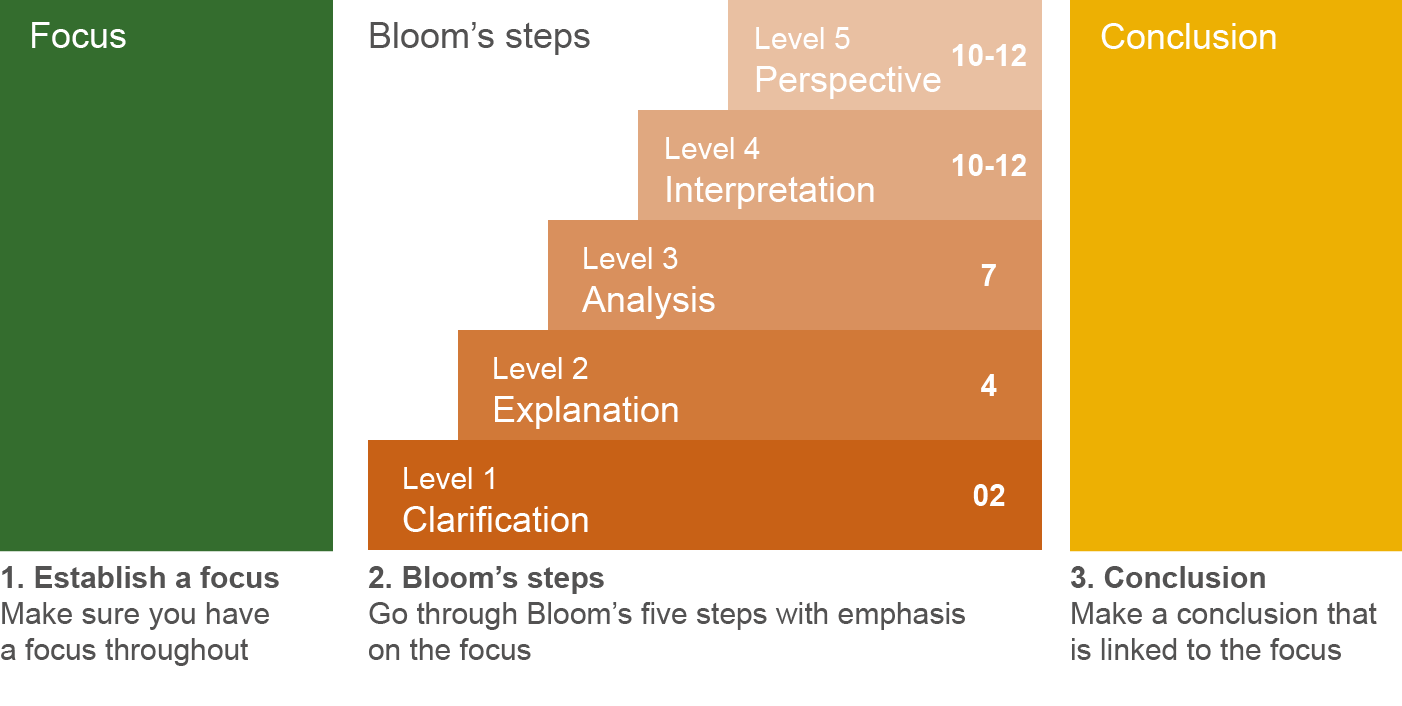
Your job: Write 4-6 questions for your group to discuss. The questions should have to do with the section of the book you are reading, and be tied to a focus - and follow Bloom’s taxonomy. Be sure your questions are interesting and open-ended so everyone will be able to answer it in their own way.
When you meet with your group: read your questions to the group and give everyone a chance to answer. After everyone has answered, share your answer with the group.
Wizard
Your job: Search for words in this section of the book that you (or others in your group) might not know. Write the sentences in which the words are located in the text and provide the contextual definition. You should find a minimum of 10 words.
When you meet with your group: First, share the challenging word you found. Show them where it is in the story. Then, have each person try to predict the definition. After everyone has shared their definitions, you can tell them the real meaning of the word.
Ranger
Your job: Find parts from this section of the reading that remind you of things that happened in another text that you have read, movie you have seen, television episode, song, etc. Describe how the two texts are alike. You should also find parts that remind you of things that happened to you or someone else in real life. Be sure you write in complete sentences, refer back to the text often, and include lots of details. Your writing should be in “essay style” format, no more than one page in length.
When you meet with your group: Describe the event from the story you’re reading and tell how it connects to another story you have read before and how it reminds you of real life. Describe the similarities to the group. Then, ask if anyone else can make other connections.
Artificer
Your job: Draw a picture of one scene from the section of the book you are reading. Your picture should be colorful and have lots of details.
When your group meets, do not say what your drawing is. Let them guess and talk about it. Have each member of the group describe what’s happening in your picture. Then you can tell them about it.
Passage picking
Everyone’s job is to pick parts of the section to read aloud to your group. You might choose a:
- Good Part
- Interesting Part
- Confusing Part
- Funny Part
- Important Part
- Surprising Part
- Scary Part
- Good Description
- Good Writing Sample
Be sure and indicate the page & line number in the text where the passage is located. Write 3-5 sentences explaining why you chose this passage.
Focus
Examples
- Clarification: Who is Huck living with at the beginning of the novel?
- Explanation: Why does Huck feel uncomfortable with Widow Douglas and Miss Watson’s rules?
- Analysis: How does Tom Sawyer’s “gang” show the difference between Tom’s imagination and Huck’s more practical way of thinking?
- Topic sentence “Already in the first two chapters we see a contrast between Tom’s imagination and Huck’s more practical way of thinking, which sets up the central conlift of the story.”
- Interpretation: What do the first two chapters suggest about Huck’s attitude toward “civilized” society?
- Perspective: From Huck’s point of view, is freedom more important than safety and comfort?