Masks
Aug 17, 2026
⋮⋮ Program
- 12.05 Hangman of the day
- 12.15 Identity in context
- 12.25 Reading poems
- 12.30 We Wear the Mask
- 12.45 Break
- 12.55 Analysing poems
- Types of poems
- FLIRT-model
- 13.25 Where Children Sleep
- Discuss
- Write
- 13.55 Break
- 14.10 What Remains of Edith Finch?
- 14.30 Exit-ticket
Hangman of the day
word: perspective
hint: Term from last lesson
max: 6
word: ethnicity
hint: Term from last lesson
max: 6word: tansverse flute
hint: Term from last lesson
max: 6Identity in context
- What are four words or phrases that describe you?
- What are four hashtags you would use to describe yourself on a social media profile?
- What are four words or phrases your friends or acquaintances would use to describe you?
- What are four words or phrases your family would use to describe you?
- What are your affiliations? These might include nationality, school, teams, clubs, etc.
- List one or two strengths you would like to continue to develop.
- What are some qualities you judge other people on?
- “We contain multitudes,” wrote Walt Whitman to describe that we express ourselves differently in different contexts. What is an example of how your personality changes as you associate with different groups of people? Why do you think it changes?
Reading poems
- Read the poem out loud!
- Read it again.
- Visit ambigous places, and look up difficult words.
- Summarise the plot.
We Wear the Mask
- Read the poem out loud!
- Read it again.
- Visit ambigous places, and look up difficult words.
- Summarise the plot.
Analysing poems
- Determine the type of poem
- Use the FLIRT-model to analyse the poem
- Always remember to give examples from the poem to substantiate your analysis.
Types of poems
- Didactic poems: clear message or moral; meant to teach or explain something directly.
Examples: “Do Not Stand at My Grave and Weep”, “Eternity”, “If—” - Dramatic monologue: an imagined speaker addresses a silent listener; often a persona poem.
Examples: “Maximus, to himself”, “Lady Lazarus” - Elegy: poem of mourning for someone who is dead; often moves from lament to praise to consolation.
Examples: “O Captain! My Captain!”, “The Haw Lantern” - Epic poems: long narrative poems with a heroic protagonist, legendary adventures, and historical or mythical importance.
Examples: Beowulf, The Cantos, Paradise Lost - Epigrams: very short poems, often witty or satirical, focused on a single thought or event.
Example: “Candy is dandy, but liquor is quicker” - Prose poems: written in prose form but read like poetry; often use repetition, symbols, and metaphors.
Example: “Of Memory and Distance” - Limericks: funny, light-hearted five-line poems with the rhyme scheme aabba.
- Slam poetry: performance-based poetry with live audience participation; developed by Marc Kelly Smith in 1980s Chicago.
FLIRT-model
F — Form
- What structure does the poem have?
- Does the structure have a certain effect on the reader?
- Is there any correspondence between structure and content?
L — Language
- What language is used?
- Is the language emotive, persuasive, formal, informal etc.?
- Which sentence structures, verbs, adjectives, and adverbs are used, and with what effect?
I — Imagery and rhetorical devices
- Is there use of metaphors, similes, antithesis, onomatopoeia, allusion, repetition, or alliteration?
- What is the effect?
R — Rhyme/rhythm
- Does the poem rhyme?
- Which rhyme scheme is used, and what is the effect?
T — Theme
- Is there a message or theme in the poem?
- Where is it visible?
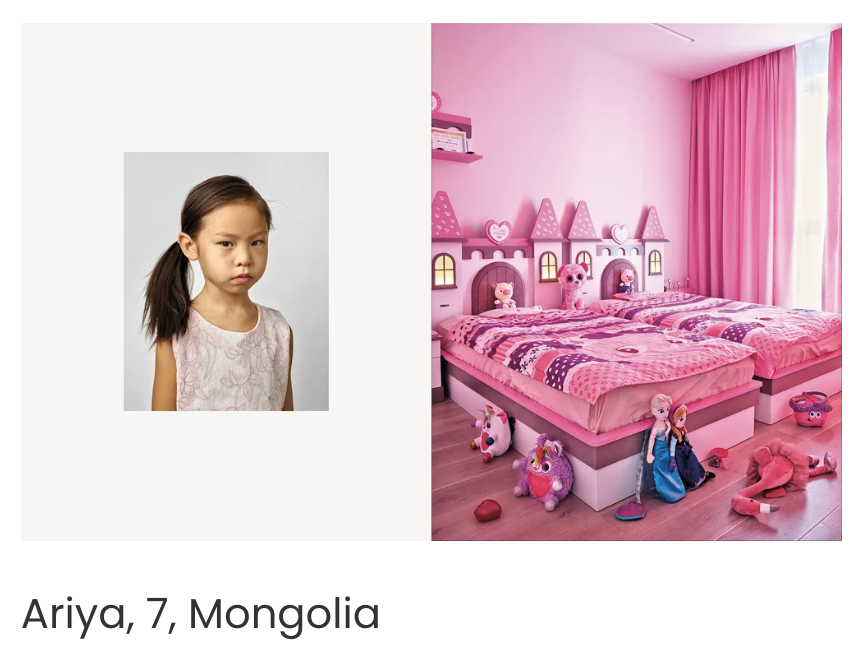
Where Children Sleep
Discuss
- Look at and discuss Where Children Sleep
- What can we learn about the children based on their bedrooms?
- How does this inform their identity?
- Is this an expression of public or private identity?
- Is it an invasion of their privacy?
Write
- Find a room that makes you appreciate your own room and explain why.
- Find a room that reminds me of your room in some way.
- Write about a room that interested you the most and why.
What Remains of Edith Finch
Exit-ticket
- Do the quick-write exercise on the handout.