Identity of things
Aug 20, 2026
⋮⋮ Program
- 08.35 Warm-up discussion
- 08.45 Molly’s chapter
- Playthrough
- Characterisation
- 09.20 Break
- 09.35 Reading fiction
- Analysing fiction
- Exam
- Analysis
- 10.15 Break
- 10.25 Grammatik: Ordklasser
- 10.45 Reading
Warm-up discussion
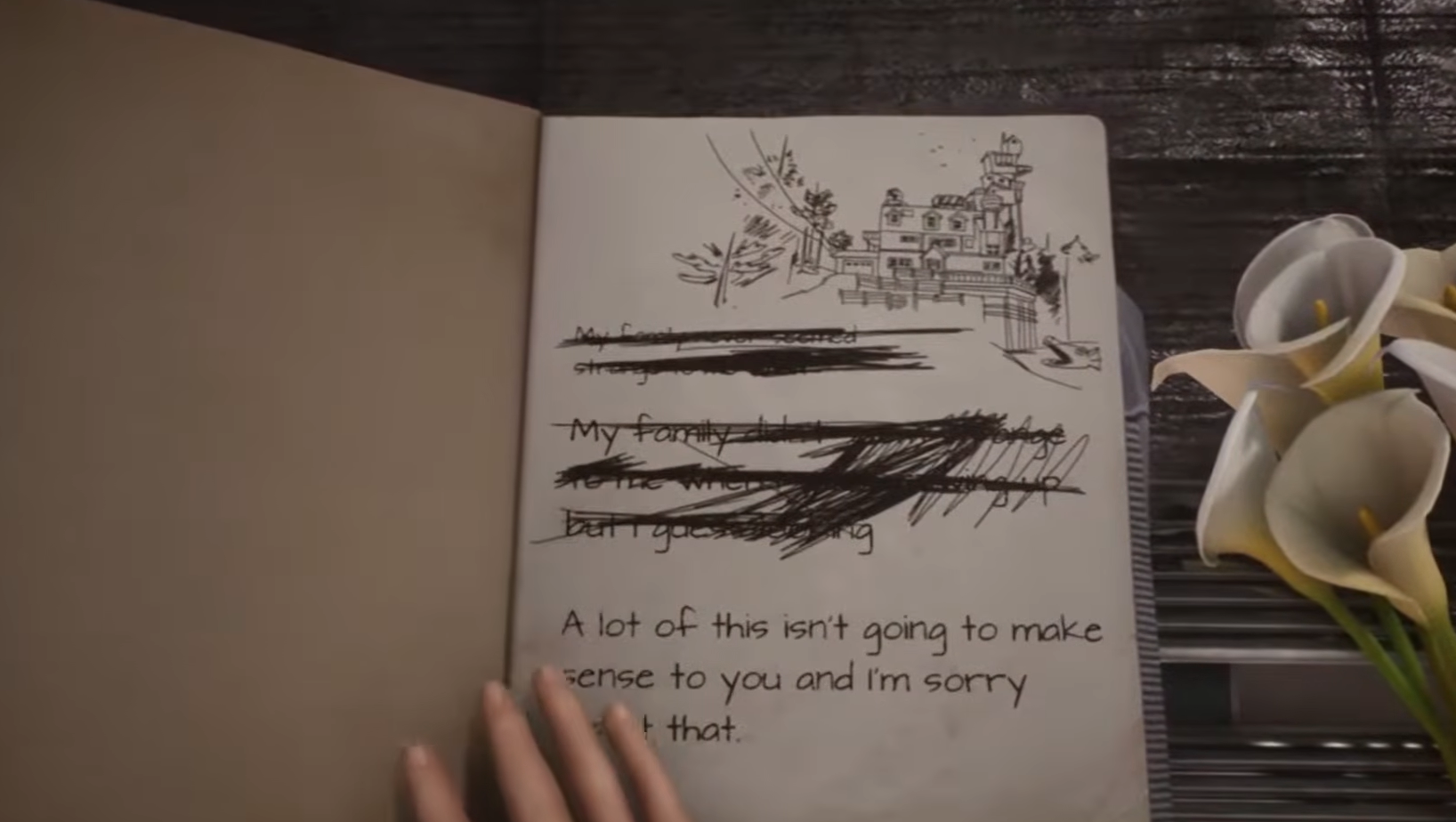
- The entire story is told through Edith’s journal. Can we trust what she tells us? Why or why not?
- What is a flashback? Is the entire game a flashback?
- Can we trust the narrator? Is she writing for a public or private audience? Is this more or less likely to make her presentation truthful?
Playthrough
Characterisation
- How can personal items and possessions project identity?
- How and why do we project status through our possessions?
- Judging by the items in her room, how is Molly’s experience an expression of her identity?
- If Molly identifies with nature and animals, how does that affect the choices she makes?
Analysing fiction
Plot/structure
- How is the story built up?
- Is it chronological, with flashbacks, open ending, climax, turning point?
Characterisation
- How are characters presented?
- Directly or indirectly?
- How do they develop?
Setting
- Where and when does the story take place?
- What is the social/cultural environment?
- How does the setting affect characters and theme?
Narrator / point of view
- Who tells the story?
- What is the effect of this perspective?
- Is the narrator reliable?
Language
- What kind of language is used?
- Formal/informal, descriptive, symbolic, emotional?
- Are there rhetorical devices or imagery?
Theme/message
- What central themes are explored?
- What message or comment does the text seem to make?
Exam
- 6-8 minute presentation
- Summary
- Analysis
- Relate to theme
- Dialogue
Analysis
- ACE
- Answer
- Cite
- Explain
- PEE
- Point
- Evidence
- Explanation
Grammatik: Ordklasser
Verbum, substantiv, artikel, pronomen, adjektiv, adverbium, præposition, konjunktion, numerale, interjektion
Reading
Ordklasser
| Latin | Dansk | Forklaring | Eksempler |
|---|---|---|---|
| Verbum | Udsagnsord | Ord, der kan bøjes i tid | say, go, get, take |
| Substantiv | Navneord | Ord, der kan sættes the foran | year, day, thing |
| Artikel | Kendeord | Bestemmelsesord til substantiver | a, an, the |
| Pronomen | Stedord | Ord, der kan stå i stedet for et substantiv | it, you, their, who |
| Adjektiv | Tillægsord | Ord, der beskriver substantiver og pronomener | new, good, different |
| Adverbium | Biord | Ord, der beskriver verbal-led, adjektiver, adverbier eller sætninger | very, really, simply, here |
| Præposition | Forholdsord | Ord, der viser en position i forhold til et substantiv | in, on, from, before, during |
| Konjunktion | Bindeord | Ord, der binder sætninger og ord sammen | and, or, but, because, when |
| Numerale | Talord | Ord, der kan skrives som tal | two, four, third, tenth, a thousand |
| Interjektion | Udråbsord | Ord, der udtrykker udråb | ah, oh, gosh |