10-03
⋮⋮ Program
- Comprehension
- Broad analysis
- Focused analysis
≣ Tasks
Comprehension
- In what ways does the description of Bibb County align with the stereotypical view of Alabama we talked about last week?
- In what ways does it not?
- What are the crimes that John wants Brian to help investigate?
- Who is involved in the murder case? Who are the witnesses, and who hears what?
- Why is uncovering the truth important to John?
- Do you think there has been a murder that was covered up? Why? Why not?
- What role does the introduction about the challenges of fixing old clocks play in this episode?
- Make a short characterisation of John B. McLemore. Use quotes from the episode.
Broad analysis
How does John describe the area in which he lives?
And why does he not move away? You may include the following quote:
“Oh my God. I am 49 years old. Or is it 48? Well, I’m closer to 49. I should have – boy, if you use this in the future, you’ll sure have to have a cuckoo bird bleep it. I should have got out of this goddamned fucking shit town in my 20s. I should have done something useful with my life. I love my home. I don’t know why. I’ve lived here all my life. My mom’s lived here all her life. My dad’s lived here most of his life. And Grandpa Miller’s lived here all his life. Places like that should be important.”
(13:15–13:50 min.)
Broad analysis
What narrative devices to create suspense are used in this episode?
- foreshadowing (a hint of something to come)
- surprises (events/people that are not what they seemed)
- hooks (something which keeps the listener engaged during the episode, e.g. pieces of information that suggest something interesting is coming up shortly)
- cliffhangers (endings to passages/chapters that tease further dramatic development)
Broad analysis
John has given Brian Reed three short stories to read:
“A Rose for Emily”, “The Necklace”, and “The Renegade”.
What role do the short stories play in the podcast? How does Reed use them?
Bloom’s Taxonomy
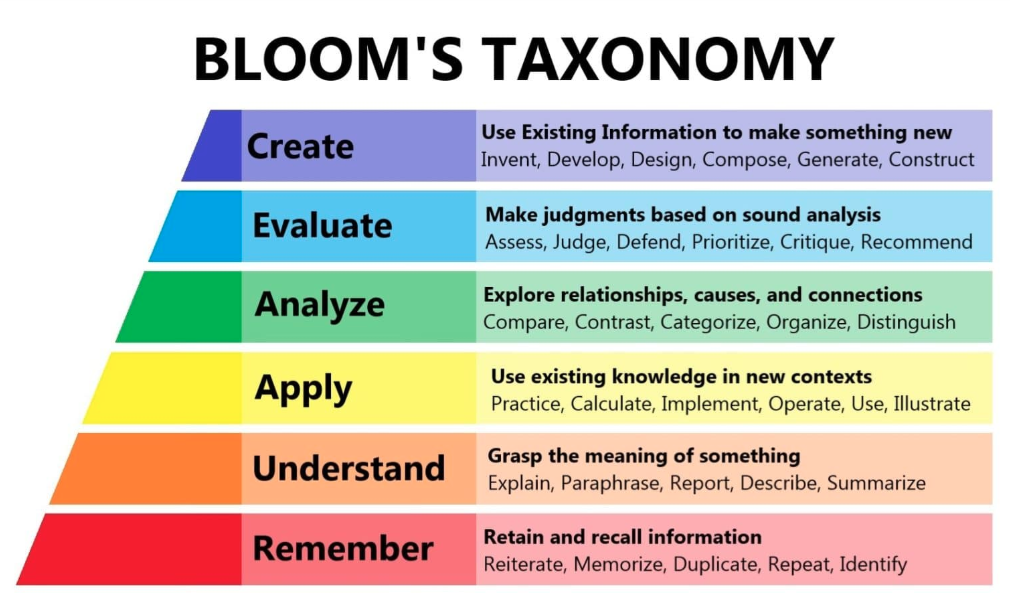
Questions
- how does John describe the area in which he lives?
- why does he not move away?
- why is bibb county one of the worst?
- why did John email the podcast
- What did the county officer do?
- what is John alleging?
- is the murder a fake scenario?
- What is John’s relation to the town of Woodstock?
- Does John feel like he belongs in the town? Why? Why not?
- Does the text say anything in general about the causes of loneliness?
- How is the connection between John and Woodstock described?
- Is John the cause of his own depression or is he depressed because he lives in a fucking shit town?
Language
Listen to the following quotes and comment on the pronunciation:
And of course, losing the dog the other week. That didn’t help. You know, I take in strays, which shouldn’t surprise you. Considering where I live, you shouldn’t be the least bit surprised that these people around here just dump their dogs out on the side of the road. At one time, I’ve had as many as 21. I got 14 now – well, 13. Yeah, so that was really hard, because that was an old dog and a good dog.
(05:17–05:45 min.)
We have the poorest education. We’ve got 95 churches in this damn county. We only have two high schools and no secondary education. And we got Jesus, ‘cause Jesus is coming and global warming is a hoax. You know, there’s no such thing as climate change and all that. Yeah, I – I’m in an area that just hasn’t advanced, for lack of a better word.
(06:20–06:43 min.)
How would you characterize the way McLemore speaks?
Anything you notice that you connect with a Southern dialect?
Language
In case you have a hard time describing what you just heard, here are some characteristics of Alabama English:
-
offglide: the vowels /ɪ/ /ɛ/ /æ/ often take [ə] offglide in many stressed monosyllables.
This means that a word with a monophthong (one vowel sound) like bed becomes a diphthong (two vowel sounds) [beəd].
A new consonant is practically inserted, making the monosyllable word a two-syllable word. -
monophthong: the vowel /aɪ/ (which is a diphthong) is often a monophthong of the type [aː] with the word drawn out at the end.
Listen to the excerpts from the podcast again, and see if you can find examples of the dialect of Alabama belonging to the above-mentioned characteristics.
Language
Comment on the language in the following quote:
BRIAN REED: So just tell me what happened. I mean, you kind of mentioned this in an email, but there wasn’t a lot of detail. And I did a little googling online and didn’t really find much. So yeah, tell me, what do you know?
JOHN B. McLEMORE: I’m hoping that’s one of the things y’all have the capability of doing, is finding much. All I’ve managed to find out is that Dylan Nichols went to school down here at West Blocton High School. Basically, I’ve got these kids out here digging a hole between the house and the yard in the summer, and we’re going to plant some cast iron plant. That’s Aspidistra elatior, in case y’all don’t know.
BRIAN REED: I don’t know what either of the things you just said are, but that’s fine.
JOHN B. McLEMORE: OK, well, that’s the scientific name. That’s the cast iron plant. You know how these kids talk on cell phones all day long? You can’t get them to do nothing because they’re on their cell phone. And they’re tweeting, and they’re YouTubing, and they’re always on Facebook. And I’m out there on the back porch. And if you keep your mouth shut, you’ll be surprised what you can learn. Because kids around here have grown up so destitue they don’t have enough sense to be ashamed of anything. They just tell everything.